
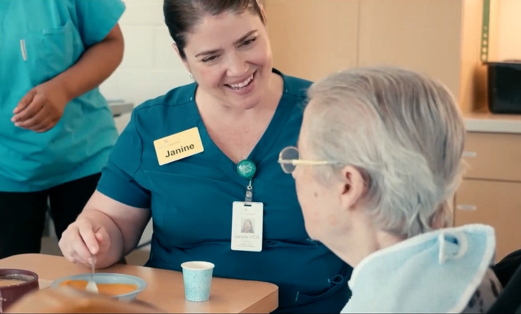
As we age, many of us will eventually spend time living in a personal care home (PCH), a space where our health and daily needs are supported by staff when our ability to care for ourselves diminishes. For those working in PCH organizations across the province, including Actionmarguerite, this only adds to their mission of ensuring that care is provided in the most dignified, person-directed way possible.
“Elder care was initially based on a medical model, which was based on a military model, which tells us that inherently, that will present as quite a rigid system,” explains Jennifer Rodrigue, Chief Innovation and Strategy Officer at Actionmarguerite. “For many years, we’ve spoken of person-centred living. Now, PCHs are going further than that, to person-directed living. The person living in care is a full human being who is responsible for directing their life, and the people around them are in charge of supporting those goals.”
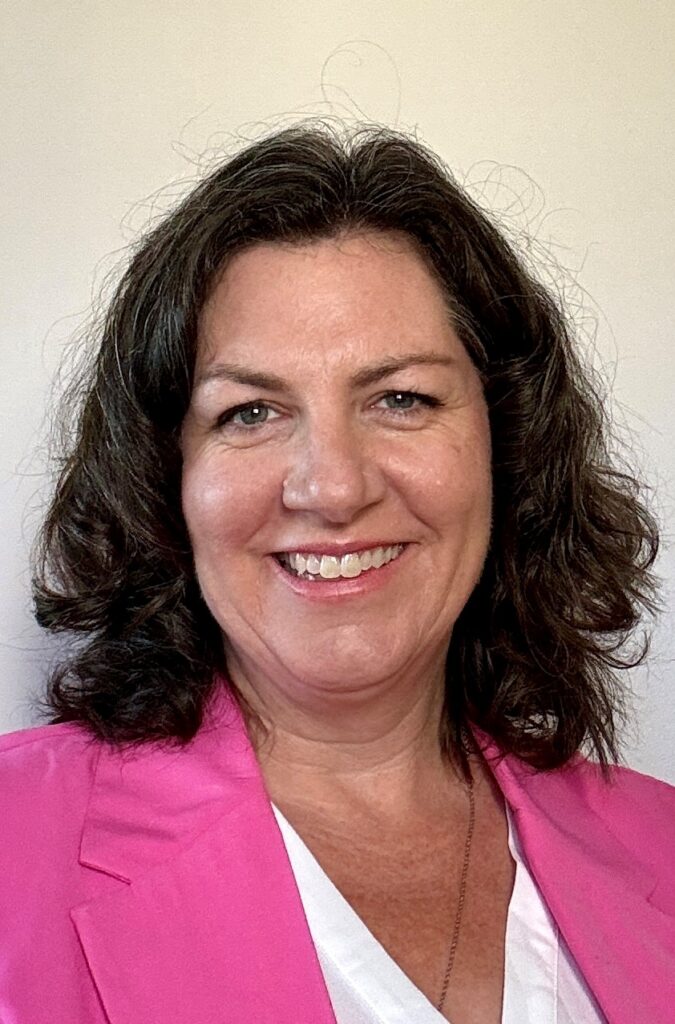
The three-day training, being offered to staff in rotation, helps staff and board members learn about the core basics of person-directed care together. “We start with the 10 principles of person-directed care, and then the domains of well-being,” shares Rodrigue. “We are learning the antidote to a home where people are lonely, bored or helpless is to sit together and start to reimagine what this could be. The sharing circle has been really powerful, as we start to deconstruct and reconstruct the way we want to provide care.”
Rodrigue explains the realities of the way PCHs are structured, funded and managed leads to outcomes that neither residents nor staff find ideal. “At a recent conference I attended, we were presented with a stat that said that 100% of older Canadians surveyed would rather die than live in a PCH,” she explains. “I think there’s a really good reason for that. If you told any of us that we would lose our free will, be on someone else’s schedule, not be able to choose when and what we eat, and only have a bath once a week… We wouldn’t choose that for ourselves.”
In a hospital setting, care might look more urgent, require tighter schedules for treatment or a lack of privacy for safety. Rodrigue says this makes sense in a medical model, where an acute issue requires it. “When it comes down to it, getting older isn’t getting sicker, it’s an acquired physical or intellectual disability, depending on what challenges you encounter,” shares Rodrigue. “We’re treating them like they’re sick when they’re not, which is the result of ableism and ageism. There’s nothing but opportunity to get better a delivering this kind of service.”
Residents, staff and family members are certainly on board with the concept of each person having more agency in their life and care. Staff at Actionmarguerite are passionate about the quality of life of residents, but the realities of changing an organizations culture can be challenging. “How do we ensure we’re making a conscientious change to our culture and our care model, in what that doesn’t feel bad for the people who are delivering care?” Rodrigue ponders. “We don’t want it to be confusing or disorienting to staff, residents and families, so we’ve engaged Eden Alternative to help us manage this change smoothly.”
While a new role is being created that will help embed new policies, procedures and changes to the culture of care at Actionmarguerite, the core motivation of meeting people’s needs remains the same: “Everyone needs a purpose and a meaningful role,” Rodrigue concludes. “Not all of us know what it feels like to be receiving care and never giving. That power imbalance doesn’t feel good, so we want to work with residents: what’s meaningful to you? How do you want to contribute to your life and your community? There are so many ways we can explore this. My hope is that we’re on our way to creating a better model for PCHs across Manitoba.”